Language

Language




The road atmosphere and traffic rules differ significantly between Japan and Vietnam/Indonesia. Many people feel anxious, wondering if “driving habits that were normal in my home country might be violations in Japan.” This article organizes the traffic rules and driving manners of these three countries and provides a clear summary of the key points that Vietnamese and Indonesian nationals should know to safely obtain a driver’s license in Japan and drive with confidence.
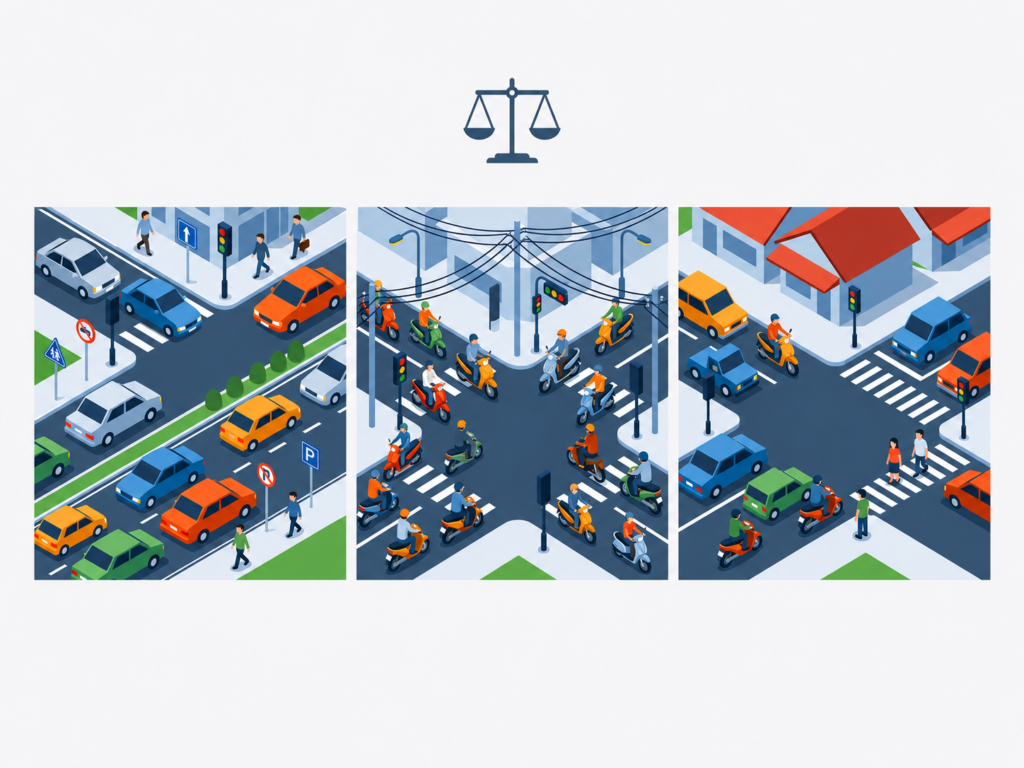
The road environment and driving culture differ between Japan and Vietnam/Indonesia, which can be confusing for first-time drivers.
In Japan, “I didn’t know” is not an acceptable excuse, making prior understanding essential.
Understanding the differences in traffic rules between countries is the foundation of safe driving.
The purpose of comparing the rules of these three countries is to achieve safe driving. It also helps prevent violations and accidents.
Understanding Japanese standards also makes learning smoother when obtaining a license.
Understanding the differences in driving norms between countries leads to safety and peace of mind.
This article explains the differences in traffic rules between Japan and Vietnam/Indonesia, focusing primarily on automobiles and motorcycles. The target audience is those considering obtaining or converting a license in Japan.
While based on Japan’s Road Traffic Act, enforcement may vary by region, so please confirm final details with the relevant authorities.
Understanding the differences before actually driving is the first step to ensuring safety.
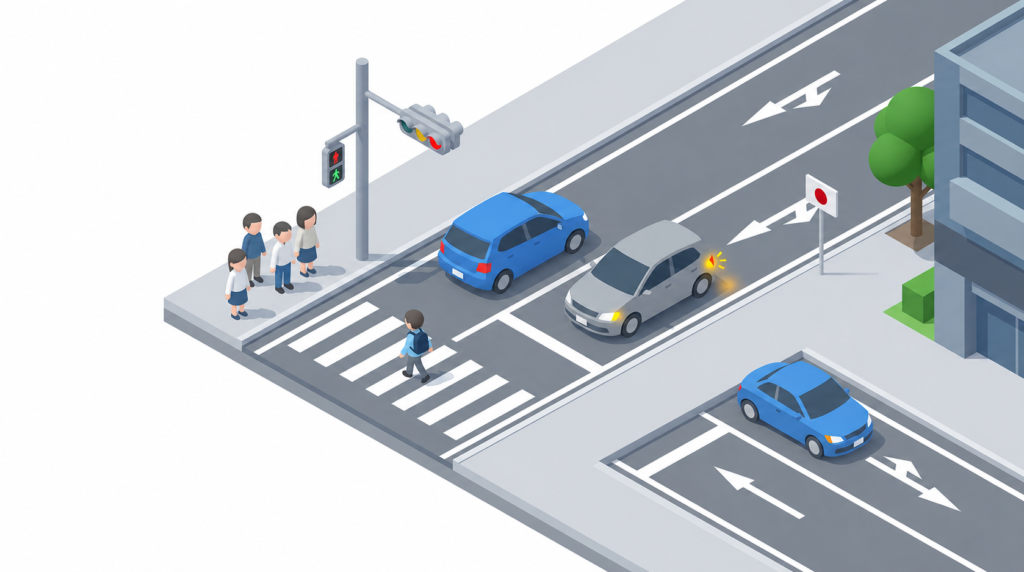
Understanding the direction of travel and priority relationships is essential for driving in Japan. Japan follows left-hand traffic.
Correctly understanding traffic rules and priority relationships is the foundation of safe driving.
In Japan, there is strong awareness of protecting pedestrians and bicycles. Pedestrian priority at crosswalks is fundamental.
The basic rule in Japan is to drive with the understanding that pedestrians take priority over vehicles.
Japan has strict prohibitions regarding safe driving, and violations result in fines and point deductions. Some aspects differ from overseas norms.
Drinking or smartphone use becomes a serious violation even with a casual attitude.
In Japan, the idea that “just a little is okay” does not apply.
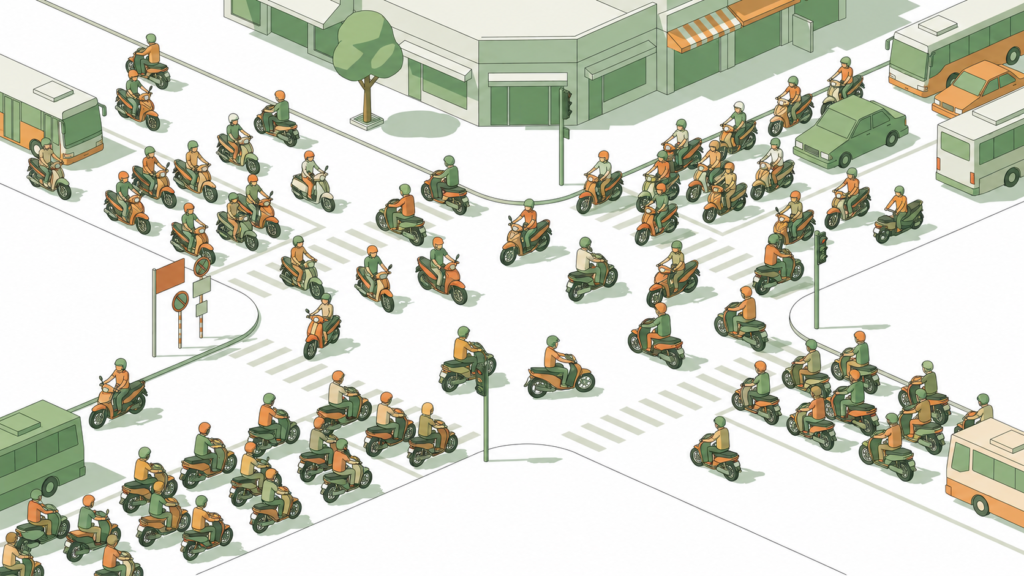
Vietnam follows left-hand traffic like Japan, but there are differences in road environment and driving style. Flow-oriented driving is characteristic in urban areas.
There are situations where you may notice a gap between rules and actual driving.
In Vietnam, it is important to understand both “flow-matching driving” and “legal regulations.”
Vietnam is characterized by motorcycle-centered traffic, with most daily transportation done by motorcycle.
In Japan, driving with the same mindset is considered dangerous and is strictly regulated.
Indonesia follows left-hand traffic with right-hand drive like Japan, but regional differences are significant. Driving environments differ between urban and rural areas.
The traffic environment differs greatly from regional cities in Japan.
In Indonesia, it is important to understand the driving mindset that assumes congestion.
In Indonesia, various vehicles share the same roads, and flexible driving is common.
In Japan, following distance and lane compliance are emphasized, and driving with the same mindset becomes dangerous.
All three countries follow left-hand traffic, but enforcement differs. Japan strictly enforces lane and speed compliance, while Vietnam and Indonesia show flexible driving during congestion.
Driving based on signs and rules rather than surrounding flow is the foundation of safety.
The perception of priority rules at signals and intersections differs among the three countries. In Japan, pedestrian priority is fundamental.
In Japan, constant awareness of pedestrian priority at intersections is necessary.
At intersections in Japan, thoroughly prioritizing pedestrians is the foundation of safe driving.
Driving habits from Vietnam or Indonesia can become dangerous behaviors in Japan. First, it is important to be aware of the differences.
In Japan, these lead to violations and accidents.
In Japan, it is important to reset your local driving mindset and drive based on rules.
In Japan, not only signs but also road markings are important, and you need to understand their meanings correctly.
First, learning broadly by color and shape makes understanding easier.
Understanding Japanese traffic signs by “color and shape” is the first step to safe driving.
Japan License Connect is a service that organizes and introduces driving school information for foreigners aiming to obtain a license in Japan. It makes it easy to find driving schools with multilingual support.
You can learn while reducing language-related concerns.
Choosing a driving school where you can learn in a suitable language environment leads to successful license acquisition.
Japan License Connect organizes information not only on driving school locations and fees but also on support content for foreigners.
It serves as decision-making material rather than just a list.
Being able to choose a driving school that matches your situation is key to proceeding with license acquisition with confidence.
Obtaining a license involves multiple procedures beyond choosing a driving school, including applications and document preparation. These aspects can feel burdensome for those uncertain about Japanese.
Understanding the overall process allows you to proceed with confidence.
Grasping the overall picture of procedures in advance leads to smooth license acquisition.
Japan License Connect introduces driving schools with multilingual support and provides reliable assistance to foreign nationals aiming to obtain a driver’s license in Japan. Information on theory and practical training as well as exam preparation is also comprehensive.
 関連記事
関連記事 Feel free to contact us with any questions.
 For individuals