Language

Language


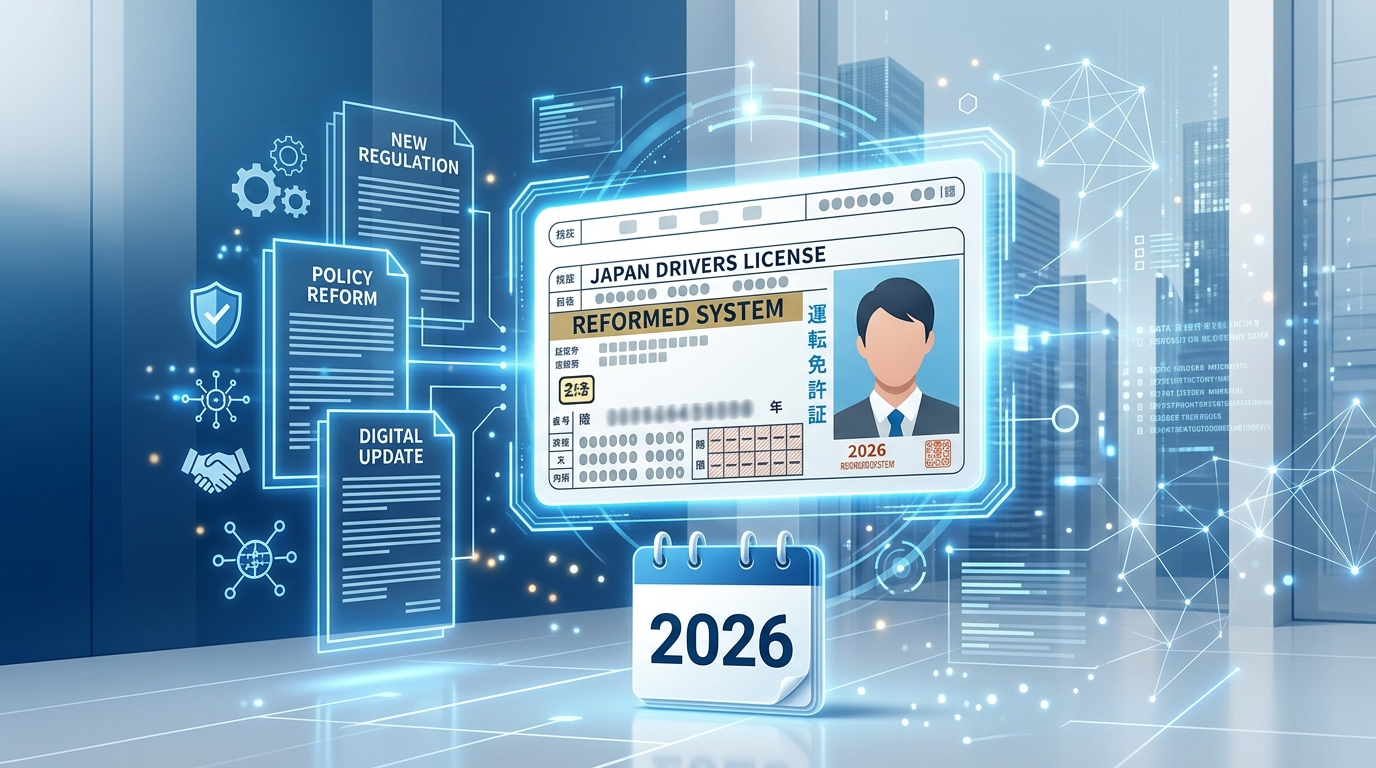
For the driver’s license system from 2026 onward, it is important to understand that rather than everything changing at once, a series of phased reviews is likely to continue. First, as in the past, the process remains the same: discussions are held in expert panels and councils of the National Police Agency, a draft amendment to the Road Traffic Act is compiled, it is deliberated and passed by the Diet, and then an enforcement date is set. It is best to understand that the matters currently being discussed are also still at the stage where “when and to what extent they will be reflected in law” will be determined through future deliberations.
In recent years, major revisions have generally been made every few years, and in between, detailed rules tend to be developed at the cabinet order and ministerial ordinance levels. Around 2026 as well, multiple themes are being examined in parallel, including how speed regulations should be structured, standards for senior driver courses and license renewals, and license categories for professional drivers. In particular, social issues such as the declining birthrate and aging population, the 2024 logistics problem, and transportation disparities between urban and rural areas form the backdrop, and the license system is being used as a tool to address them.
For companies and individuals, rather than thinking “we only need to look at what takes effect in 2026,” a stance is required that monitors the direction of reforms on the assumption of continuous reviews that include 2027 and beyond. Areas such as advances in automated driving technology and the spread of MaaS (Mobility as a Service) are also highly likely to remain on the agenda for future license system discussions. Driver’s licenses are expected to be treated not merely as qualifications, but as social infrastructure closely tied to mobility and ways of working.
Recent revisions to the Road Traffic Act and the driver’s license system are positioned not as one-off rule changes, but as part of a longer-term trend based on a traffic safety vision and demographic changes. Representative examples include measures to prevent accidents involving senior drivers, stricter penalties for distracted driving, and clearer rules for bicycles. These efforts are not only about “reducing accidents,” but also about “building systems to operate a transportation society with limited manpower.”
The revisions from 2026 onward can be seen as an extension of this trend. Enhancements to senior driver courses and reviews of certain license conditions are already progressing in stages, and going forward the focus is likely to be on improving the accuracy of checks at renewal and refining license categories in a more granular way according to specific vehicle types and uses. In the background is the reality that in rural areas it is difficult to live without a car, while in urban areas concentrated traffic volumes and diverse mobility options coexist, making it harder to ensure safety.
In other words, the reforms from 2026 onward are less about “a new theme suddenly emerging” and more about moving one step further in addressing safety, labor shortages, and aging—issues that have been discussed to date. As a result, individuals will face higher expectations for driving skills and self-management, while companies will be required to take clearer responsibility for appointing, training, and supervising drivers. The trend of treating licenses as something that shifts from “get it and you are done” to “maintain it and be evaluated through driving” is likely to strengthen further.
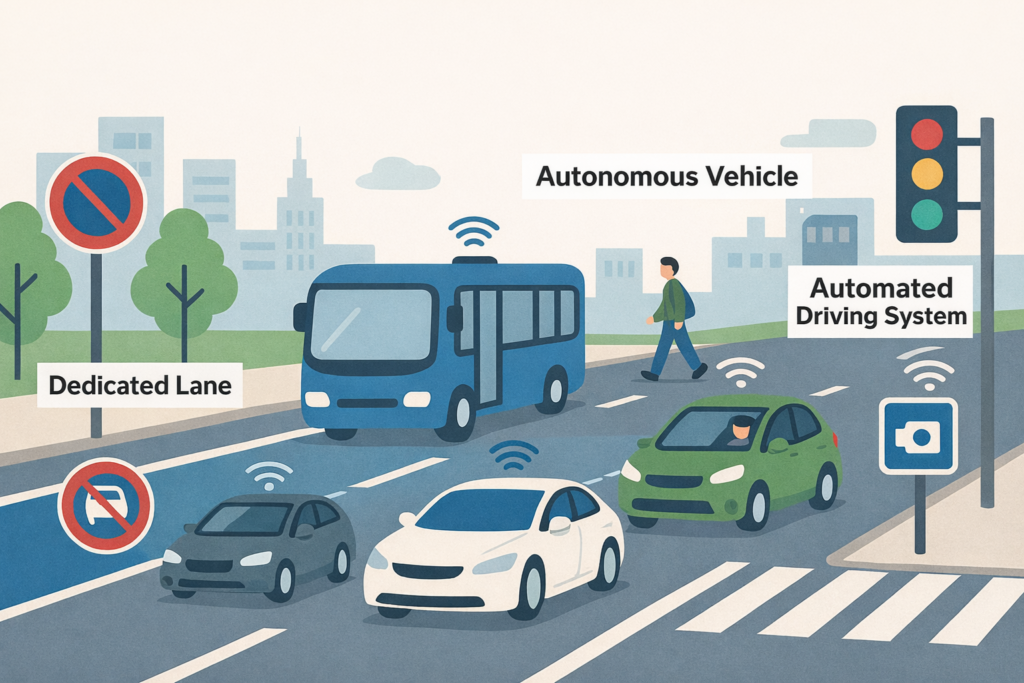
In Japan as well, the trend toward reducing speeds on residential streets is steadily strengthening. Initiatives such as Zone 30 have already been expanding, and around 2026, areas where around 30 km/h is the basic speed may expand more broadly (*). This is emphasized as part of creating towns where seniors and children can move around safely, while also reducing accidents involving pedestrians and cyclists.
*1 Reference: “Promoting Zone 30 Plus” (National Police Agency)
If “driving at no more than 30 km/h” on residential streets becomes the norm, drivers’ awareness and route choices will inevitably change. Rather than using residential neighborhoods as shortcuts, it will be increasingly necessary to drive mainly on arterial roads, which will also affect companies’ delivery route planning and travel time estimates. In addition, enforcement against speeding is expected to target smaller areas more finely than before.
For individual drivers, rather than “going with the flow,” it will be necessary to frequently check signs and road markings and reassess one’s own sense of speed. Navigation apps and in-vehicle devices are improving the accuracy of speed limit information, but ultimate responsibility lies with the driver. For companies as well, it will be important to build systems that allow sufficient leeway in delivery plans and work shifts so that unrealistic time settings do not encourage speeding.
Accidents involving senior drivers have long been a matter of social concern, and they are also one of the most important themes in reviewing the license system. While cognitive function tests and strengthened senior driver courses are already being advanced, from 2026 onward it is expected that renewal intervals, course content, and options for license categories will be further examined.
For example, it is being discussed that for people above a certain age, the use of conditional licenses—rather than standard driver’s licenses—may expand (e.g., limiting the times of day, areas, or vehicle types they may drive) (*).
*Reference: National Police Agency, “Measures for Senior Drivers”
In addition, at renewal-time tests and courses, efforts to carefully communicate not only a simple “pass/fail,” but also points to be mindful of when continuing to drive and how to coordinate with family members and physicians are increasingly being emphasized. How to support “choosing the appropriate means of mobility for that person,” including voluntary license surrender, is becoming a key point in system design.
On the other hand, in rural areas cars are essential for daily life, and in many cases surrendering a license can directly lead to difficulties in living. Therefore, rather than solving the problem through the license system alone, coordination with local transportation and community support frameworks is indispensable. For individuals and families, it is important to regularly check driving conditions and discuss alternatives and lifestyle options before being suddenly pressed to surrender a license. For companies as well, a comprehensive review is required for driving duties performed by older employees and contracted drivers, including their health conditions and job content.
Younger and novice drivers have limited driving experience and are consistently considered a group at higher risk of accidents due to judgment errors or reckless driving, and countermeasures continue to be examined. In addition to skills and classroom instruction at driving schools, how to provide follow-up for a certain period after obtaining a license is expected to be an important theme in discussions from 2026 onward as well.
In recent years, new risk factors have also emerged, such as “distraction” due to the spread of smartphones and various devices, and dangerous driving aimed at social media attention. As a result, training content is increasingly emphasizing not only learning vehicle operation, but also education that addresses the dangers of distracted driving and delves into relationships with passengers and psychological aspects. Experiential education using accident footage and simulators, as well as hazard prediction training, is also being introduced more widely.
For the driving school industry as well, this trend demands a qualitative shift in educational content. Rather than simply helping students pass the exam, there is an increasing need to “develop drivers who do not cause accidents and do not commit violations.” The reforms from 2026 onward are expected to play a role in reinforcing that direction.
The driver’s license system reforms from 2026 onward will affect all companies that operate company vehicles. If your employees regularly drive vehicles such as sales cars, shuttle vehicles, or light cargo vehicles, it is important to view this as an opportunity to review your safe driving management system. Simply notifying the organization of new rules may become insufficient.
Key points to consider when reviewing a safe driving management system include the following perspectives:
The process of recruiting, developing, and evaluating drivers is an area directly affected by license system reforms. This applies not only to roles where driving is the primary duty, such as logistics and passenger transport, but also to hiring and managing general positions that “include driving,” such as sales and field roles.
With reforms in mind, it is important first to clarify the required license category and driving experience at the time of hiring, and to organize what driving duties will be assigned after joining. In addition to the license type, an approach is required that appropriately checks renewal status and past violation history, understands risks, and then decides placement. When hiring younger or novice drivers, it is also worth considering a phased development plan, such as providing ride-along instruction for a certain period or limiting the times of day or areas in which they drive.
Furthermore, the more severe the labor shortage in an industry, the more likely an atmosphere can arise such as “we will overlook minor violations” or “it cannot be helped because we are busy.” However, in light of the direction of the legal system from 2026 onward, such an attitude poses a major medium- to long-term risk. Companies are required to clearly state a “safety first” policy at the management level and embed it into each process of recruitment, training, and evaluation.
The reforms to the driver’s license system and the Road Traffic Act from 2026 onward include a wide range of themes, such as measures for senior drivers, education for novice drivers, ensuring safety on residential streets, and reviewing license categories for commercial drivers. For individuals, this is an opportunity to reassess their own and their family’s driving; for companies, it is also a time to redesign safe driving management systems and talent strategies. While the details of the system may continue to change, the direction of “prioritizing safety above all and considering driving and human resources from a medium- to long-term perspective” itself will remain unchanged.
Reforms can feel burdensome if you simply wait for them. However, if you gather information early and begin preparing and taking action, they can also become an opportunity to improve the driving environment for yourself and your organization. With the changes from 2026 onward in mind, steadily working on what you can, one step at a time, should form the foundation for making the transportation society safer and more sustainable.
Japan license connect will continue to share information on the driver’s license system.
Please be sure to check it.
 関連記事
関連記事 Feel free to contact us with any questions.
  For individuals