Language

Language


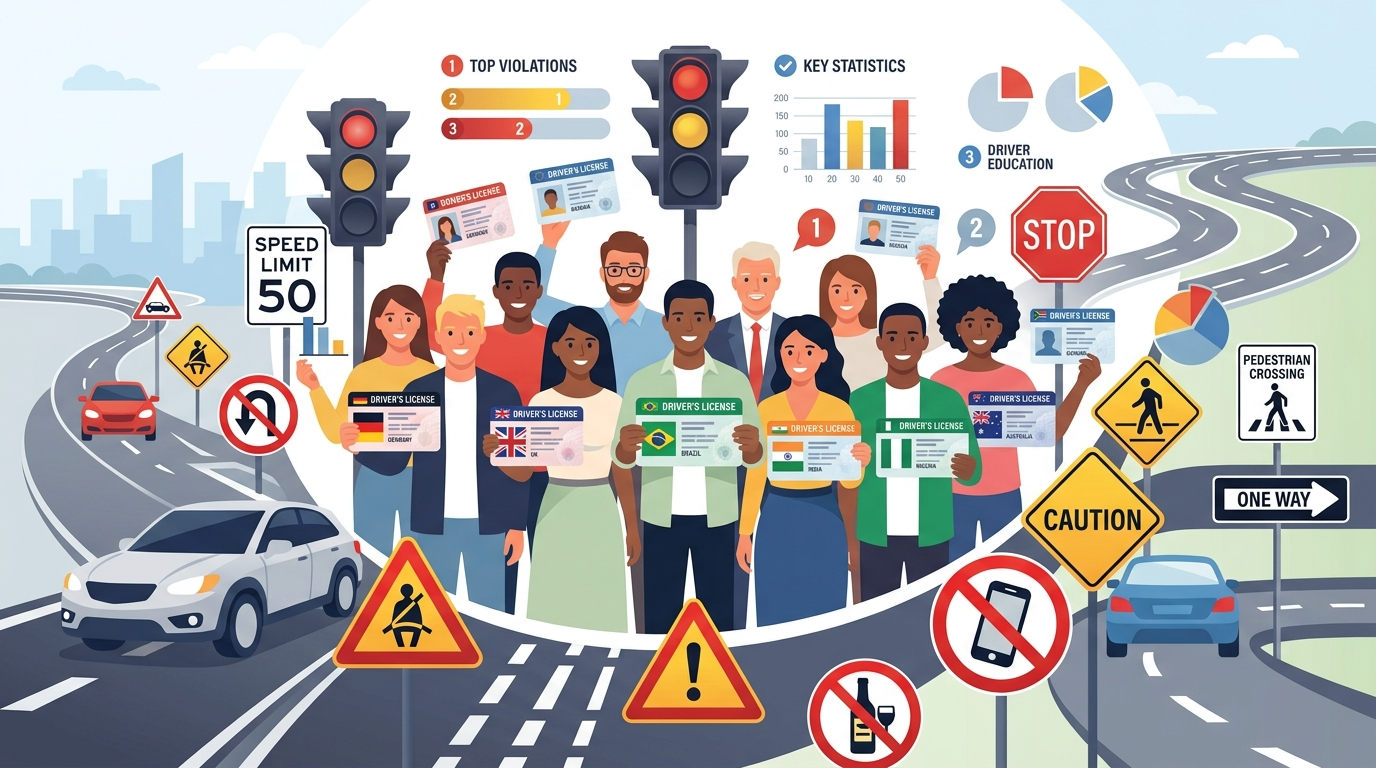
The number of foreign nationals driving in Japan is steadily increasing for various purposes, including tourism, business, technical internships, and specified skilled work. Not only tourists using rental cars, but also foreign residents using automobiles in daily life and work are expanding, and in some rural areas, private vehicles have become essential infrastructure.
The methods of obtaining a driver’s license are also diverse. Some have obtained licenses at driving schools in Japan, while others drive using licenses converted from their home countries or international driving permits for short-term use. It can be said that people with vastly different driving experiences and backgrounds are sharing the same roads.
Looking at traffic accident statistics, while the absolute number of accidents involving foreign residents is often smaller due to a smaller population base compared to Japanese drivers, a certain proportion of accidents involving violations do occur. In particular, cases where insufficient understanding of signs and markings, or unfamiliarity with Japan’s unique traffic rules, serve as the background are notable. Additionally, the number of foreign nationals driving for work purposes, such as company vehicles, business cars, and trucks, is increasing, and violations and accidents are often directly linked to workplace accidents, compliance, and corporate image.
Violations frequently cited among foreign drivers include speed-related offenses, misunderstandings regarding stop signs and right-of-way, and violations of pedestrian protection obligations. While the specific ranking order varies depending on data and region, the following items are commonly identified as trends.
The first is speeding and failure to maintain proper following distance. Japan’s speed limits may feel “slow” depending on the country or region, and there are cases where drivers intuitively exceed the speed limit, especially on highways and main roads. Additionally, since automatic transmission vehicles are mainstream, accelerator operation becomes monotonous, and speed can increase without the driver noticing.
The second is failure to stop at stop signs and errors in judging priority roads. Particularly when the “stop” sign differs in design or placement from the driver’s home country, or at intersections where the position of the “stop” sign and the actual stopping point (stop line) do not align, oversights are more likely to occur. For those from countries with right-hand traffic, confusion regarding “left-right priority relationships” stemming from Japan’s left-hand traffic is also a common contributing factor.
The third is violations related to pedestrians and bicycles. Driving with the sensibilities of one’s home country without being aware of Japan-specific operations and local rules, such as pedestrian priority at crosswalks, the obligation to slow down in school zones, and the concept of bicycle lanes, leads to violations. These are often the result of “not knowing” or “doing it out of habit” rather than malicious intent, making prior education and continuous follow-up essential.
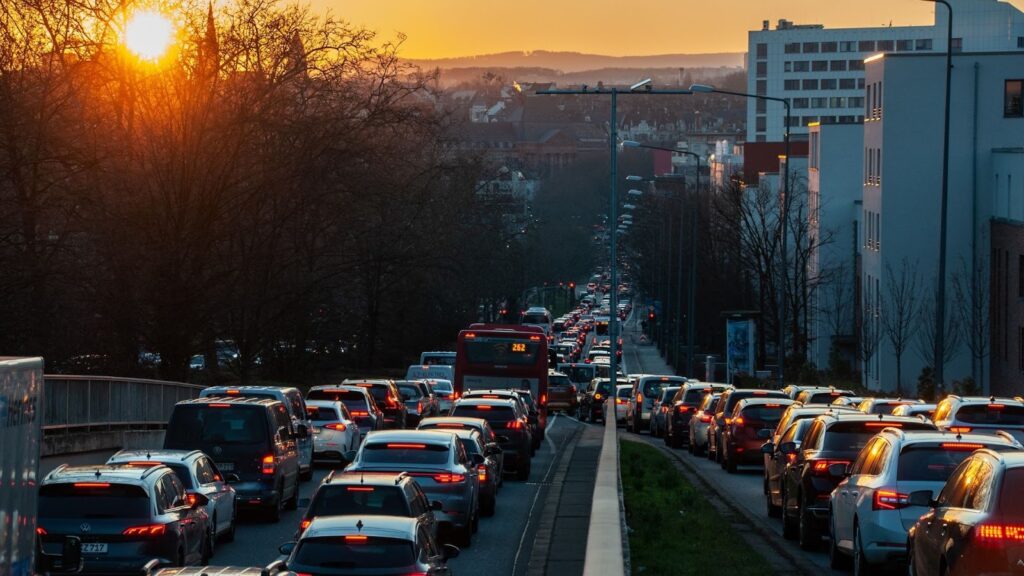
Speeding and failure to maintain following distance are common violations regardless of whether the driver is foreign or Japanese, but there are specific background factors for foreign drivers. First, in cases where Japan’s speed limits are set lower than in the driver’s home country, a gap between perceived speed and road signs is easily created, and “thinking one is going with the flow” can lead to violations. Additionally, on roads where speed limit change points are difficult to discern, violations due to overlooking signs are more likely to occur.
Regarding following distance, if one is not accustomed to Japan’s traffic environment, it can be difficult to grasp the appropriate sense of distance. Especially in urban areas, due to congestion and heavy traffic, the distance from the vehicle ahead tends to close, consequently increasing the risk of rear-end collisions. For large vehicles and trucks, if there is insufficient understanding that stopping distance becomes longer, the level of danger increases further.
Violations involving stop signs and priority roads are areas where problems easily arise if one does not properly understand Japan’s signs and intersection structures. Especially on roads being driven for the first time, the meaning of signs must be judged instantly, which tends to place a high burden on foreign language speakers. To prevent violations in this area, it is important for companies to combine systematic education with on-site verification.
The flow in which violations related to stop signs and priority relationships are likely to occur can be organized step by step as follows:
To reduce violations by foreign drivers, it is important to conduct careful screening from the hiring stage. If hiring is done without sufficiently understanding driving experience, licenses, and aptitude, post-hire education costs and accident risks increase. The points to confirm before hiring can be broadly organized as follows:
After hiring, an educational design that allows gradual understanding of Japanese traffic rules and company-specific internal rules is essential. Rather than cramming complex content all at once, the key is to organize “basic fundamentals to be understood first” and “rules particularly important for work” with clear priorities, and proceed in manageable steps.
The foundation consists of general traffic rules such as Japanese road signs and markings, left-hand traffic rules, priority relationships, and speed regulations. Here, by preparing materials in the native language, English, or other languages, and making extensive use of diagrams, photos, and videos, understanding can be facilitated intuitively beyond language barriers. On top of that, a structure that layers company-specific internal rules (uniforms, alcohol prohibition, smartphone use prohibition, reporting rules, etc.) is effective.
To drive safely in Japan, it is essential for foreign drivers themselves to have a proactive attitude toward learning traffic rules. However, memorizing a vast number of rules all at once is burdensome, and it is necessary to devise the order of learning. The steps for efficient learning can be organized as follows:
By taking these steps, it becomes easier to avoid the state of “feeling anxious because there are too many unknown rules.” Additionally, utilizing smartphones or tablets to be able to check rules at any time increases peace of mind. The habit of reviewing dashcam footage and writing down observations to objectively reflect on one’s own driving is also useful for violation prevention.
Even after learning Japanese traffic rules, the key to violation prevention lies in how consciously one can practice them in daily driving. Foreign drivers in particular are prone to tension and fatigue when driving in unfamiliar environments, and there are situations where attention may decline. Therefore, it is important to conduct simple self-checks before and after driving each day.
Before driving, ask yourself “Have I slept enough?” “Are there any lingering effects of alcohol?” “Do I have any health concerns?” and also check the condition of the vehicle’s lights, turn signals, and brakes. By understanding the route and required time before departure and being conscious of a schedule with margin, it also helps deter speeding. While driving, it is important to consciously reflect on “Have I overlooked any signs?” “Are my following distance and speed appropriate?” “Am I giving sufficient consideration to pedestrians and bicycles?”
After driving, reflect on whether there were any close calls or moments of anxiety during the day’s driving, and keeping simple notes makes it easier to analyze one’s weaknesses later.By accumulating small observations, it becomes easier to discover and correct one’s own “dangerous habits” early.If the company provides a reflection format or sets up regular interview sessions, the driver’s self-checks become more effective.
Common violations among foreign drivers, such as speeding, failure to stop, and insufficient consideration for pedestrians and bicycles, are by no means unusual. However, the risk of violations and accidents can increase when insufficient understanding of Japanese traffic rules and road environments overlaps with differences in language and culture. That is why it is important for both companies and drivers themselves to correctly understand the “points where violations are likely to occur” and their background, and to put effort into prior education and daily follow-up.
Japan License Connect will continue to provide information on Japanese traffic rules and rules that foreign drivers should be aware of. Please check it out.
 関連記事
関連記事 Feel free to contact us with any questions.
  For individuals