Language

Language


Automated driving is categorized into levels 0 through 5, depending on the scope of driver assistance and who is responsible for driving. At Levels 1 and 2, the system assists with part of the driving task, and the driver remains primarily responsible. From Level 3 onward, the system takes on the driving task under certain conditions, and the higher the level, the broader the range of situations the system can handle.
However, even as automated driving advances, it doesn’t mean you’ll immediately no longer need to understand driver’s licenses or traffic rules. At Level 3, the driver must take over when the system requests it. Even at Level 4, where and when the vehicle can operate is limited, and permit systems and safety management frameworks become essential.
In particular, if you’re a foreign resident driving in Japan, it’s important to understand not only the automated driving framework but also Japan’s licensing system and traffic rules. This article organizes the differences by automated driving level, then clearly explains how regulations are being developed for an automated driving society and what the future may hold for driver’s licenses.
An automated driving society is one where cars assist human driving or, under certain conditions, the system takes over driving. However, it doesn’t mean all vehicles will immediately shift to fully automated driving.
Automated driving is divided into six levels, from Level 0 to Level 5, depending on how much the system is responsible for.
Levels 1 and 2 fall under “driver assistance,” meaning the driver remains responsible for driving. From Level 3 onward, the system becomes the primary driver under certain conditions, but the driver’s role and the drivable range vary by level.
That’s why you can’t immediately assume “once automated driving becomes widespread, we won’t need licenses.” For the time being, many human-driven vehicles—and vehicles that still require driver intervention—will remain, so understanding licenses and traffic rules will continue to be important even in an automated driving society.
To expand automated driving safely, regulatory development is necessary.
Regulatory development means creating rules so people can use it with confidence.
Key items that need to be defined include the following:
Under the amended Road Traffic Act that took effect in April 2023, a permit system has been established for Level 4–equivalent automated driving without a driver, as “Specified Automated Driving.”
Regulatory development is the foundation for using automated driving with peace of mind.
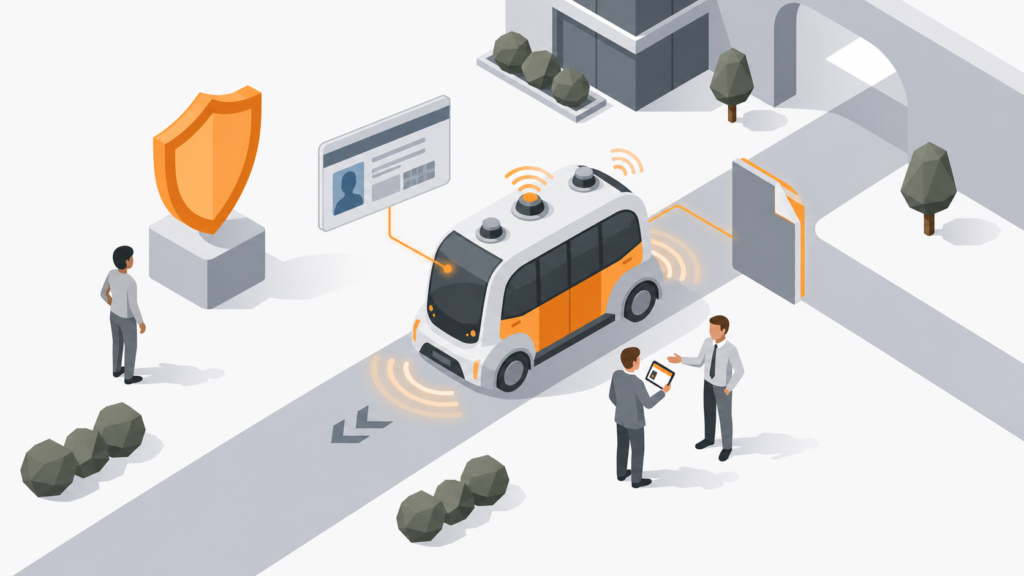
Level 3 is automated driving where the system handles driving under certain conditions.
However, it can’t be left to the system completely at all times.
If the system can’t respond due to changes in weather or road conditions, it may request that the driver take over.
Key points to keep in mind are as follows:
In other words, at Level 3 the system drives within the defined conditions, but the driver must respond when needed.
Even when using automated driving features, understanding your license requirements and traffic rules remains important.
In Japan, if Level 4–equivalent automated driving is conducted on public roads without a driver, it falls under the permit system as “Specified Automated Driving.”
Key points to confirm are as follows:
In other words, it doesn’t mean anyone can freely run an unmanned vehicle.
Safe operation in accordance with the system is a prerequisite.
Foreign residents also don’t need to immediately think of Level 4 as “a society where licenses aren’t needed.”At Level 4, understanding the permit system—not just the technology—is important.
Even if automated driving expands, it’s unlikely that licenses will become unnecessary right away.
That’s because human-driven vehicles will continue to share the roads.
Main reasons include the following:
For example, if you use a car for shopping or commuting, it’s reassuring to know the current traffic rules.
Living in Japan, having a license expands your mobility options.
There’s no need to worry that “there’s no point in getting a license now.”
Even in the future of automated driving, a license remains important knowledge for getting around safely and confidently.
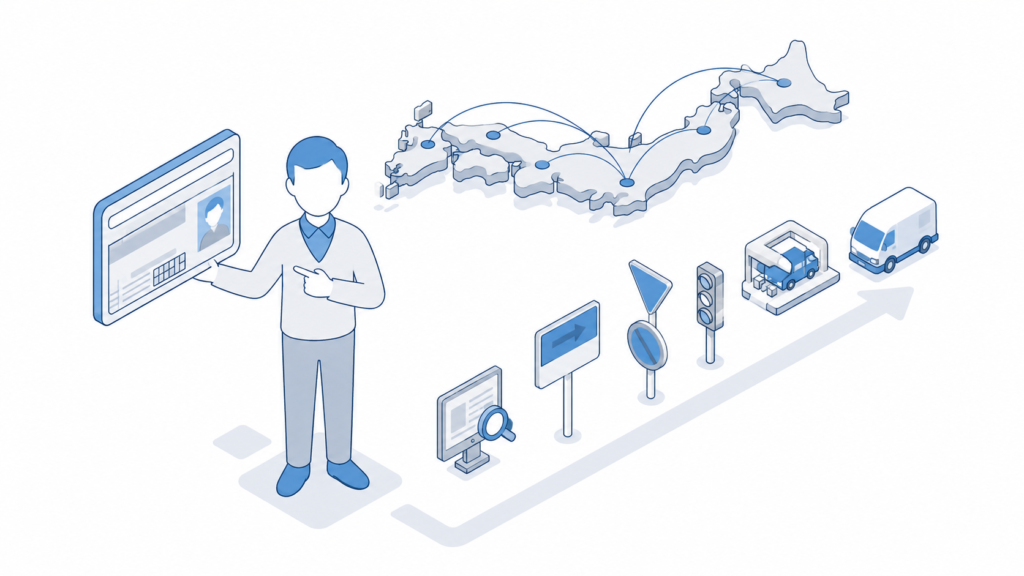
To drive in Japan, you need to confirm whether your license can be used.
This is because the required procedures vary depending on your country and length of stay.
Here’s what you should check:
In particular, for converting a foreign license, it’s reassuring to check the required documents and test details early.
Before driving in Japan, it’s important to confirm which licensing procedures apply to you.
Even as automated driving advances, understanding traffic rules is still necessary.
In Japan, there are rules you must follow, such as road signs, traffic signals, and pedestrian priority.
Key points to pay special attention to include the following:
Even with automated driving features, if the driver understands the situation, they can respond calmly.
Even on unfamiliar roads, knowing the basic rules can reduce anxiety.
Even in the automated driving era, knowing Japan’s traffic rules leads to safer driving.
Foreign residents often feel anxious when getting a driver’s license in Japan.
In particular, people may get stuck on Japanese-language explanations or the overall procedure.
Common concerns include the following:
These concerns can be eased by organizing information in advance.
It’s reassuring to check whether support is available and whether your language is supported.
With Japan License Connect, foreign residents can check information about getting a driver’s license.
Automated driving is expected to help support mobility in rural areas and for older adults.
In areas with limited buses and trains, getting around itself can be a burden.
Expected changes include the following:
However, safe operation requires road infrastructure and operating rules.
As regulations are developed, it moves closer to becoming a mobility option people can use with confidence.
Automated driving will become a future option to support people who struggle with mobility.
Automated driving may reduce the burden of logistics and commuting.
It’s gaining attention as a measure against long driving hours and labor shortages.
Key benefits include the following:
For example, if daily commuting involves less driving stress, mornings can feel less demanding too.
However, we are not yet at a stage where everything can be left entirely to the car.
As automated driving spreads, responsibility in the event of an accident will also become an important topic.
That’s because it’s necessary to clarify who checks what and who responds.
Points to consider include the following:
Automated driving doesn’t automatically mean it’s safe.
People who use it also need to maintain basic safety awareness.
If you’re a foreign resident driving in Japan, it’s reassuring to know who to contact and what to do in case of an accident.In an automated driving society, both technology and human safety awareness are necessary.
When getting a license in Japan, gathering information at the start is important.
Because systems and procedures differ by country, moving forward based on assumptions can easily lead to confusion.
First, here’s what you should check:
If you’re not confident in Japanese, it’s reassuring to choose a service with clear explanations.
Even just knowing the overall process in advance can reduce anxiety about finding a driving school.
You can approach getting a license with confidence by starting with accurate information.
With Japan License Connect, foreign residents who want to get a license in Japan can check information about driving schools and the licensing process.
Easy-to-compare points include the following:
Rather than recommending only specific schools, it’s reassuring that you can easily compare conditions that fit you.
Even if you’re not confident in Japanese, you can move forward while organizing the information you need.
Using Japan License Connect makes it easier to find the licensing option that fits you.
Automated driving technology is expected to continue advancing. However, it doesn’t mean we’ll immediately enter a society where all vehicles operate unmanned.
Key points that will remain important include the following:
Even if automated driving becomes widespread, there will still be situations where people are involved. So there’s no need to worry that the value of a driver’s license will disappear right away.
Even in an automated driving society, knowledge related to driving will continue to be important.
In particular, foreign residents may feel confused by Japan-specific rules and procedures.
In that case, it’s reassuring to start gathering information about getting a license early.
Understanding how regulations are evolving is the most reliable way to prepare for an automated driving society.
When getting a license in Japan, there are many things to check in advance, such as the system and procedures, and how to choose a driving school. Especially for foreign residents, differences in language and required documents may cause anxiety.
With Japan License Connect, you can easily check information about Japan’s licensing system and helpful guidance for choosing a driving school. If you want to compare schools that fit you or understand the overall process of getting a license, we encourage you to use it. It can be a starting point for finding the right way for you to obtain a license.
 関連記事
関連記事 Feel free to contact us with any questions.
 For individuals